Garage Door Roller Repair and Maintenance: A Guide for Illinois Homeowners
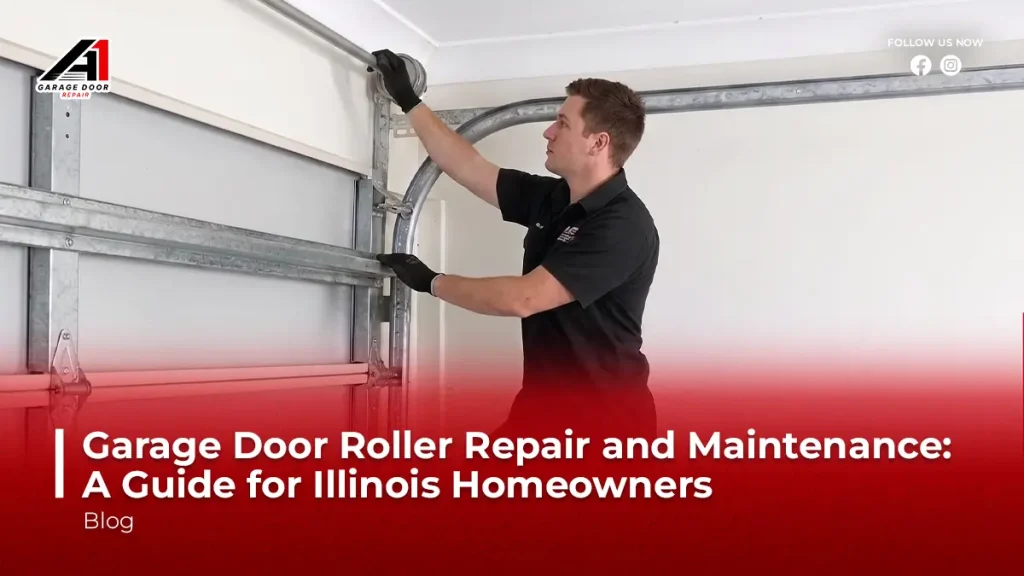
A garage door can be large and heavy, yet it is expected to move through its tracks with very little hesitation. Much of that smooth travel depends on the rollers positioned along both sides of the door. Each roller follows the track as the panels rise, curve overhead, and return to the floor.
Because these parts are small, homeowners often notice the noise before they notice the cause. A door may begin rattling near one corner, vibrating on the way up, or pausing as it moves through the curved section of the track. Those changes may point to a worn wheel, a loose roller stem, or a bearing that no longer turns freely.
Roller wear can also develop alongside other mechanical problems. Chicago temperature changes, moisture brought in by vehicles, dirt around the opening, and years of daily use can gradually affect the rollers, hinges, and track hardware. Addressing the problem early helps protect the rest of the system from unnecessary strain.
The Mechanics of a Garage Door Roller: How Problems Arise
Garage door rollers travel inside the vertical and horizontal tracks. Their job is to guide the door along a predictable path while the springs and cables manage most of its weight. When the rollers turn freely and remain seated correctly, the door should move at a steady pace without excessive shaking.
A damaged roller changes how the door distributes pressure. It may drag instead of turning, lean against one side of the track, or create resistance that makes the garage door opener work harder than it should. The added resistance can also loosen hinges and brackets or accelerate wear where the roller meets the track.
Roller trouble should therefore be viewed as a system issue rather than an isolated wheel problem. If the door is also crooked, scraping, or shifting sideways, the technician may need to check for garage door track problems before recommending a repair.
What Wears Out a Garage Door Roller
Every opening and closing cycle sends the rollers through the full track system. Homes that use the garage as a primary entrance may operate the door several times each day, creating thousands of cycles over the years. Bearings can become rough, nylon wheels can develop flat spots, and plastic components can crack as the material ages.
Dirt and old lubricant can make the movement less consistent. The track itself should not be packed with heavy grease, since sticky buildup can collect dust and debris. Rust or corrosion may also interfere with metal rollers and nearby hinge hardware, particularly in garages where moisture regularly enters from rain, snow, or wet vehicles.
Alignment is another factor. A loose hinge, bent track, worn spring, or damaged cable may force a roller against the side of the track. In that situation, replacing the visible roller without correcting the source of the pressure may only provide a temporary improvement.
Common Signs Your Garage Door Roller Needs Attention
Roller wear usually appears gradually. Pay attention to changes that repeat in the same area of the door or become more noticeable with each cycle.
- The door shakes or vibrates while opening and closing.
- Grinding, scraping, popping, or rattling sounds come from the track area.
- The door moves smoothly in one section but jerks in another.
- A roller looks cracked, chipped, tilted, or partly separated from its hinge.
- The roller stem has excessive movement or appears to be pulling outward.
- The opener sounds strained or takes longer to complete a full cycle.
- A roller repeatedly slips toward the edge of the track or comes out completely.
- The door hesitates as the rollers move from the vertical track into the curved section.
Several of these symptoms can also appear when the door is unbalanced or when a cable is beginning to fail. A comparison with the warning signs in A1’s guide to garage door cable problems can help homeowners understand why a complete inspection is more useful than guessing from the noise alone.
What Homeowners Should Avoid When Dealing with Damaged Rollers
A noisy or uneven door can tempt homeowners to keep testing it. Repeated operation may make the original problem worse, especially when a roller is already loose or outside the track.
- Do not repeatedly operate the opener when the door is shaking, binding, or moving crookedly.
- Do not force a roller back into the track while the door is unsupported.
- Do not loosen the bottom brackets or touch the cable attachment points.
- Do not bend or pry the tracks to create extra space for a damaged roller.
- Do not coat the inside of the tracks with thick grease.
- Do not continue using the door when a roller stem is pulling out of its hinge.
- Do not stand under a raised door that appears uneven or unstable.
- Do not assume the opener is the only problem simply because the motor sounds louder.
Should One Roller or the Complete Set Be Replaced?
The right approach depends on why the roller failed and how the remaining rollers look. An individual roller damaged by a single impact may be replaced on its own when the other components are still in good condition.
However, rollers installed at the same time usually experience similar amounts of use. When several wheels are cracked, noisy, loose, or difficult to turn, replacing the set can provide more consistent travel and reduce the chance of another near-term service call.
Before making that decision, the technician should inspect the hinges, tracks, cables, and door balance. New rollers cannot solve a bent track or an uneven lifting system that keeps pushing them out of alignment.
Why a Damaged Roller Should Not Be Ignored
A garage door may keep moving after a roller begins to fail, but continued operation can spread the damage. A wheel that drags can strain the opener. A loose stem can enlarge the opening in its hinge. A roller that no longer stays inside the track may allow one section of the door to twist or become unsupported.
The risk becomes greater when several rollers are worn at the same time. The door may pull unevenly, placing added pressure on the tracks, cables, hinges, and panels. What begins as an irritating vibration can eventually become a jammed or partially off-track door.
Early service is usually less disruptive because the technician can inspect the surrounding hardware while the door is still controlled. Waiting until a roller breaks completely may leave the garage inaccessible or require repairs to more than one component.
How Professional Garage Door Roller Service Works
A roller service normally starts with an operational check. The technician watches the door move, listens for sound changes, and notes where the vibration or hesitation occurs. Each accessible roller can then be checked for cracks, worn bearings, flat spots, loose stems, and excessive side-to-side movement.
The inspection should also include the hinges, track fasteners, brackets, cables, springs, and opener. This helps determine whether the roller is the cause of the rough movement or a symptom of another problem elsewhere in the door system.
When replacement is needed, the door is supported while the correct hardware is removed and the new rollers are installed. The technician then confirms that the rollers sit properly in the track and tests the door through multiple cycles for smooth, controlled travel.
Can You Replace Garage Door Rollers Yourself?
Some rollers are easier to reach than others, but roller replacement is not automatically a safe do-it-yourself task. Rollers near the bottom of the door are connected to brackets that may also be tied into the cable system. Those cables work with high-tension springs and should not be disturbed without the proper tools and training.
The door must also be supported correctly while hardware is removed. If a hinge is loosened at the wrong time, the panel can shift and the door may become unstable. A technician can determine which parts can be serviced safely and whether the roller failed because of another alignment or balance problem.
The International Door Association recommends regular visual checks of springs, cables, rollers, pulleys, and mounting hardware, and advises homeowners to contact a trained technician when something looks or sounds wrong. Review its garage door care and maintenance guidance for additional safety information.
When to Schedule Garage Door Roller Repair
Schedule an inspection when the door begins shaking, scraping, rattling, or hesitating during normal use. Visible cracks, missing wheels, loose stems, or a roller that has left the track require more immediate attention.
It is also worth checking the rollers after a vehicle impact, cable repair, track adjustment, or other event that may have shifted the door. Regular garage door maintenance can catch early wear before the door becomes difficult to use.
Prompt service can reduce strain on the opener and help protect the tracks, hinges, panels, and lifting system from secondary damage.
Need Quick Garage Door Roller Repair and Maintenance? Trust only A1 Garage Door Repair!
Garage door rollers support smooth movement every time the door opens or closes. When they become worn or damaged, the door may sound rough, move unevenly, or begin pulling out of alignment.
A1 Garage Door Repair provides professional service for worn rollers, damaged hinges, track problems, broken cables, spring failures, opener issues, and other garage door concerns affecting homeowners.
If your garage door is shaking, scraping, or struggling to move, do not wait for a roller to fail completely. Contact A1 Garage Door Repair to schedule an inspection and restore dependable operation.