Garage Door Cable Problems Homeowners Should Not Ignore
Why Garage Door Cables Are Important for Safe Daily Use
For homeowners, garage door cables deal with daily use, changing weather, moisture, temperature swings, and normal wear over time. A small cable issue can quickly turn into a stuck garage door or a door that no longer moves evenly. If the problem is ignored, it can also place extra strain on the springs, rollers, opener, and tracks.
Understanding the warning signs can help you know when it is time to stop using the door and schedule professional garage door cable repair.
Why Garage Door Cables Matter for Other Parts
Garage door cables are easy to overlook until something goes wrong. They are not as visible as the door panels, opener, or tracks, but they play an important role every time your garage door opens and closes.
Garage door cables work with the spring system to help control the weight of the door. Even though the opener moves the door, the opener is not designed to carry the full weight by itself. The springs and cables help balance the door so it can move smoothly.
When the cables are in good condition, the door should lift evenly and stay controlled during movement. When the cables are damaged, the door may pull harder on one side, shake while moving, or stop before fully opening or closing. In some cases, one side of the door may hang lower than the other.
This is why cable problems should not be treated like a minor inconvenience. A damaged cable can affect the whole garage door system. If one cable snaps or slips out of place, the door can become unstable and difficult to operate safely.
What Causes Garage Door Cables to Wear Out?
Garage door cables wear down over time because they are under tension during every cycle of the door. Each time the garage door opens or closes, the cables help manage the weight and movement of the door. After years of use, that repeated tension can cause the cables to weaken.
Weather can also play a role. Chicago homes experience cold winters, humid summers, rain, snow, and temperature changes throughout the year. Moisture can contribute to rust or corrosion, especially if the cables are older or not maintained. Rust weakens the cable strands and can make them more likely to fray or break.
Another common cause is an unbalanced garage door. If the springs are worn or the door is not moving evenly, the cables may take on extra stress. Damaged rollers, bent tracks, or misaligned hardware can also force the cables to work harder than they should, among other common issues.
Common Signs Your Garage Door Cable Needs Repair
Garage door cable issues often start with small changes in how the door looks, sounds, or moves. Paying attention to these signs can help prevent a larger repair later.
- The garage door looks crooked or uneven when opening or closing.
- One side of the door appears lower than the other.
- The door shakes, jerks, or moves roughly along the tracks.
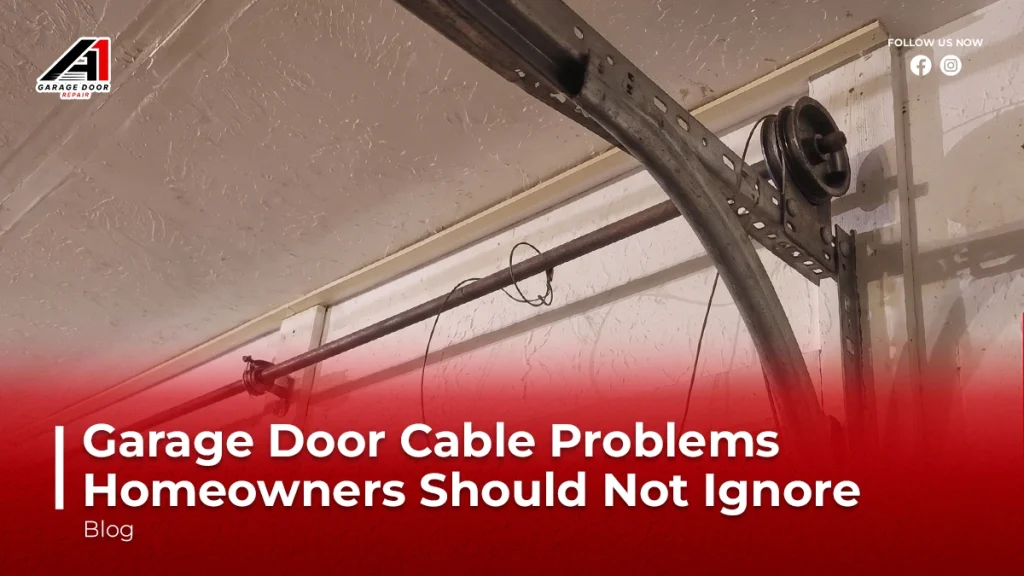
- You notice loose, hanging, or frayed cables near the sides of the door.
- The garage door stops halfway or struggles to open fully.
- The opener sounds like it is working harder than usual.
- The door closes too fast or feels heavier than normal.
- A cable has come off the drum near the top of the door.
If you notice any of these issues, it is best to avoid forcing the door open or closed. Continuing to use the door can make the cable damage worse and may lead to additional problems with the spring system or opener.
Should You Use a Garage Door With a Damaged Cable?
A garage door with a damaged garage door cable should not be used if the door looks uneven, feels unusually heavy, or has visible cable damage. Cables are connected to parts of the system that are under high tension. Trying to fix, pull, or reattach them without the right tools and training can be dangerous.
Some homeowners try to lift the door manually when the opener stops working, but this can be risky if a cable is broken. The door may feel heavier than expected, move unevenly, or drop suddenly. Even if the door opens once, the system may not be stable enough for repeated use.
The safest choice is to stop operating the garage door and call a garage door repair professional. A technician can inspect the cables, springs, drums, tracks, and opener to determine what caused the issue and what needs to be repaired.
Because garage door cables, springs, and bottom brackets are connected to parts under high tension, homeowners should avoid DIY cable repairs and follow professional safety guidance from the International Door Association.
What Homeowners Should Avoid When Cables Are Damaged
When a garage door cable becomes loose, frayed, or broken, the wrong action can make the problem worse. It can also create a safety risk for the people, vehicles, and belongings near the garage.
- Do not keep pressing the opener button if the door is stuck or crooked.
- Do not try to cut, pull, or unwind the cable.
- Do not attempt to force the door closed if one side is higher than the other.
- Do not stand under or near the door while it is unstable.
- Do not try to adjust the springs to “fix” the cable problem.
- Do not ignore fraying, rust, or loose cable strands.
- Do not drive under the door if it is hanging unevenly.
- Do not delay service if the door is stuck open and your home is exposed.
These issues are not just about convenience. A cable problem can affect the safety, balance, and reliability of the entire garage door system.
How Professional Garage Door Cable Repair Works
During a cable repair service, a technician will usually start by inspecting the full garage door system. This includes checking the cables, cable drums, spring system, bottom brackets, rollers, tracks, and door balance. The goal is to find out whether the cable failed on its own or because another part of the system created extra strain.
If the cable is frayed, rusted, loose, or broken, it may need to be replaced. In many cases, both cables should be evaluated because they usually wear at a similar rate. Replacing only one cable without checking the other side may lead to another repair shortly after.
A proper repair should restore smooth, even movement. After the cable work is completed, the technician should test the door’s balance and operation to make sure it opens and closes correctly. This helps protect the opener from unnecessary strain and helps prevent future problems.
Why Chicago Homeowners Should Not Wait on Cable Repair
A garage door cable problem rarely improves on its own. What starts as a small fray or uneven movement can lead to a door that gets stuck, comes off track, or becomes unsafe to use. Waiting too long can also turn a simple cable repair into a more expensive garage door repair.
For many Chicago homeowners, the garage is used every day for parking, storage, deliveries, tools, and access to the home. When the garage door is not working properly, it can interrupt your schedule and affect home security. If the door is stuck open, it can leave your garage exposed. If it is stuck closed, it can trap your vehicle inside.
Scheduling a garage door cable repair early can help prevent sudden breakdowns and reduce stress on the rest of the system. If your garage door is moving unevenly, making unusual sounds, or showing visible cable damage, it is time to have it inspected.
Final takeaway
Garage door cables are small compared to the full door system, but they have a big job. They help keep the door balanced, controlled, and safe during daily use. When they become worn or damaged, the door should be checked before the problem gets worse.
A working garage door should move smoothly, stay balanced, and feel dependable every time you use it. If something feels off, it is better to schedule repair before the door fails completely.