Emergency Garage Door Problems: The Warning Signs That Demand Immediate Attention
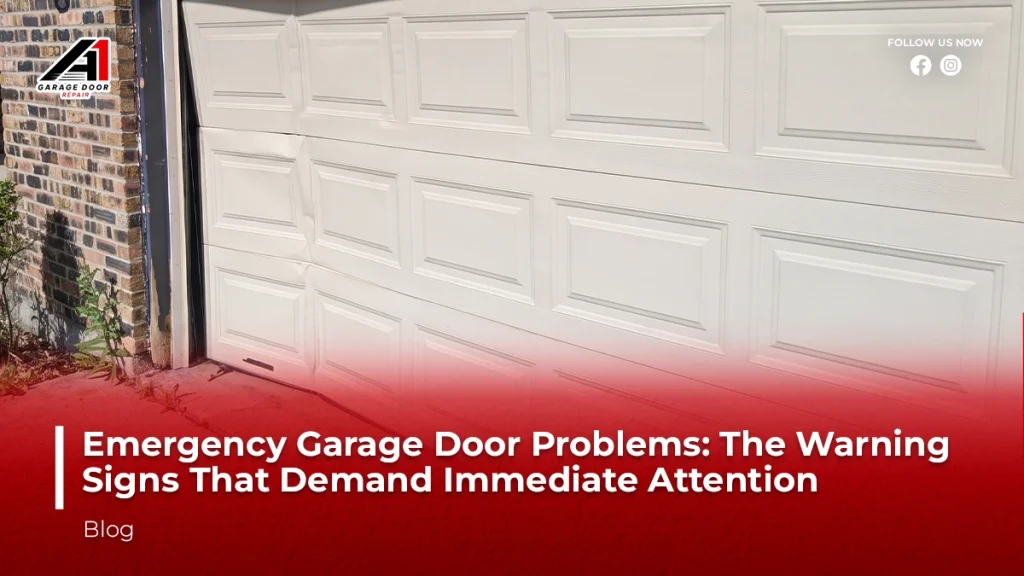
Garage door problems do not always happen at a convenient time. One moment, the door is working normally. The next, it is stuck halfway open, hanging unevenly, or refusing to close when you need to leave the house.
Some issues can wait for a scheduled inspection. Others create an immediate safety, security, or access problem. A door that is unstable or unable to close may leave your home exposed, trap a vehicle inside the garage, or put additional strain on already damaged parts.
Follow this guide and identify the most critical warning signs that demand an emergency garage door repair.
When Does a Garage Door Problem Become an Emergency?
A garage door problem becomes urgent when the door is no longer stable, secure, or safe to operate. The most obvious example is a door that is hanging at an angle or appears ready to fall. However, less dramatic symptoms can also require prompt attention.
A door that will not close leaves the garage and possibly the home vulnerable. A door that will not open may prevent you from getting a vehicle out. Problems involving springs, cables, bottom brackets, and other tension-loaded parts should also be treated carefully because attempting to move or adjust them can cause injuries.
The condition of the entire system matters more than whether the opener still responds. A motor may continue running even when another part of the door is damaged. Repeatedly pressing the remote can place more strain on the opener, tracks, cables, and door panels.
Emergency Garage Door Problems: The Warning Signs to Watch For
Not every strange noise requires an emergency visit, but certain warning signs mean the door should be left alone until it can be inspected.
- The garage door is hanging crooked or has slipped partially out of its tracks.
- A spring, cable, roller, hinge, or bracket is visibly broken.
- The door begins falling or closes much faster than normal.
- The door is stuck halfway open and will not move safely in either direction.
- A vehicle, person, or important property is trapped inside the garage.
- The door will not close, leaving the garage exposed overnight.
- The opener runs, but the door does not move or moves only on one side.
- The garage door closes without reversing when it encounters an obstruction.
- There is visible damage after a storm, vehicle impact, attempted break-in, or other accident.
When one of these emergency garage door problems occurs, stop using the door.
Overview of Issues When Dealing with Emergency Garage Door Problems
Handling emergency garage door problems of any kind requires the expertise of professionals. At times, DIY solutions can worsen existing issues, and leaving a garage door in such a state may also lead to further damage:
A Broken Spring Can Leave the Door Too Heavy to Lift
Garage door springs carry much of the door’s weight. When a spring breaks, the door may suddenly feel extremely heavy, refuse to open, or rise only a few inches before stopping.
You may also notice a gap in a torsion spring above the door or hear a loud snapping sound from the garage. The opener should not be forced to lift a door with a broken spring. Doing so can strain the motor and may cause further damage.
Spring systems operate under significant tension. The Door & Access Systems Manufacturers Association advises that worn springs, frayed cables, and tension-loaded bottom brackets should be handled by trained technicians. Review its garage door system safety guidance for additional information.
Frayed or Broken Cables Can Make the Door Unstable
Cables work with the springs to guide and support the door. If one cable slips, frays, or breaks, one side of the door may rise while the other side remains lower. The door may look crooked, jam in the opening, or pull against the tracks.
A damaged cable should not be cut, pulled, or reattached without the proper equipment. Cables are connected to components that may still be under tension, even when the garage door is not moving.
Continuing to operate the door can bend the tracks, damage the panels, or cause the remaining cable to carry more weight than intended. If the door becomes uneven, leave it in place whenever possible and arrange for professional repair.
A Door That Has Come Off Track Should Not Be Forced
An off-track garage door can happen after a cable failure, damaged roller, vehicle impact, bent track, or obstruction. Once the rollers are no longer properly seated, the weight of the door may not be supported evenly.
Trying to push the door back into position can make it shift or fall. Using the opener may also pull the door farther out of alignment. In some cases, a relatively small track problem becomes a larger repair because the door was operated after it had already become unstable.
A technician should inspect the tracks, rollers, cables, brackets, and door balance before returning the system to service. Simply placing a roller back into the track may not address the condition that caused it to come out.
A Garage Door That Will Not Close Can Become a Security Problem
A door that remains open exposes vehicles, tools, stored items, and any interior door leading into the house. During severe weather, it may also allow rain, wind, debris, or cold air into the garage.
The cause may be as simple as an obstruction near the safety sensors, but it may also involve damaged wiring, misaligned tracks, incorrect opener settings, or mechanical resistance within the door.
Check the floor and doorway for obvious objects without standing underneath the door. If the sensors appear dirty, they can be gently cleaned with a soft cloth. Do not bypass or disconnect the safety system to force the door closed.
Failure to Reverse Is a Serious Safety Concern
Automatic garage doors are designed with reversal features that help prevent entrapment. A door that continues closing after contacting an obstruction, or fails to respond when the photo-eye beam is interrupted, needs immediate attention.
The U.S. Consumer Product Safety Commission advises homeowners to test the reversing feature regularly and have the opener inspected when it does not reverse as intended. Review the CPSC’s automatic garage door opener safety guidance for more information.
Keep children, pets, vehicles, and stored belongings away from the door until the problem has been corrected. Do not treat a malfunctioning reversal system as a minor inconvenience, even when the opener appears to work normally in other situations. Always consult a professional if you encounter emergency garage door problems.
What to Do While Waiting for Emergency Garage Door Repair
Once you notice an urgent problem, a few careful steps can help prevent additional damage.
- Stop using the wall button, remote control, and exterior keypad.
- Keep people and pets away from the door and its moving parts.
- Do not stand, walk, or park underneath a partially open door.
- Do not pull the emergency release when the door is raised or unstable.
- Leave springs, cables, drums, and bottom brackets untouched.
- Move vehicles away only when there is a safe path and the door is fully supported.
- Close and lock the interior entry door if the garage cannot be secured.
- Take note of what happened before the failure so you can explain it to the technician.
The International Door Association recommends visual inspections of springs, cables, rollers, pulleys, and mounting hardware, while advising homeowners to contact a trained technician when something looks or sounds wrong. See its garage door care and maintenance guidance for more details.
Why Delaying an Emergency Repair Can Cost More
A garage door system is made up of connected parts. Damage in one area often affects another. A broken cable may pull the door out of alignment, while a failed spring can overload the opener. Additionally, a bent track can cause rollers and hinges to wear unevenly.
Continuing to operate the door may turn a single-part repair into a more involved service call. It may also damage the door panels or opener, increasing the cost of restoring normal operation.
Prompt service gives the technician a better chance to correct the original failure before secondary damage develops. It also reduces the amount of time your garage remains inaccessible or unsecured. In any case, be sure to hire a technician well-equipped in handling emergency garage door problems in your area.
Call A1 Garage Door Repair for Urgent Garage Door Problems
A garage door that is falling, crooked, stuck, unsecured, or unable to reverse should not be operated until it has been inspected. Waiting may create additional damage and leave your home, vehicle, or family at risk.
A1 Garage Door Repair provides professional garage door service for broken springs, damaged cables, off-track doors, opener failures, safety-sensor problems, and other urgent issues affecting Chicago homeowners.
Let our expertise in dealing with emergency garage door problems bring you peace of mind. Contact us today for a FREE ESTIMATE!