Repair or Replace? What to Do With a Damaged Garage Door Panel
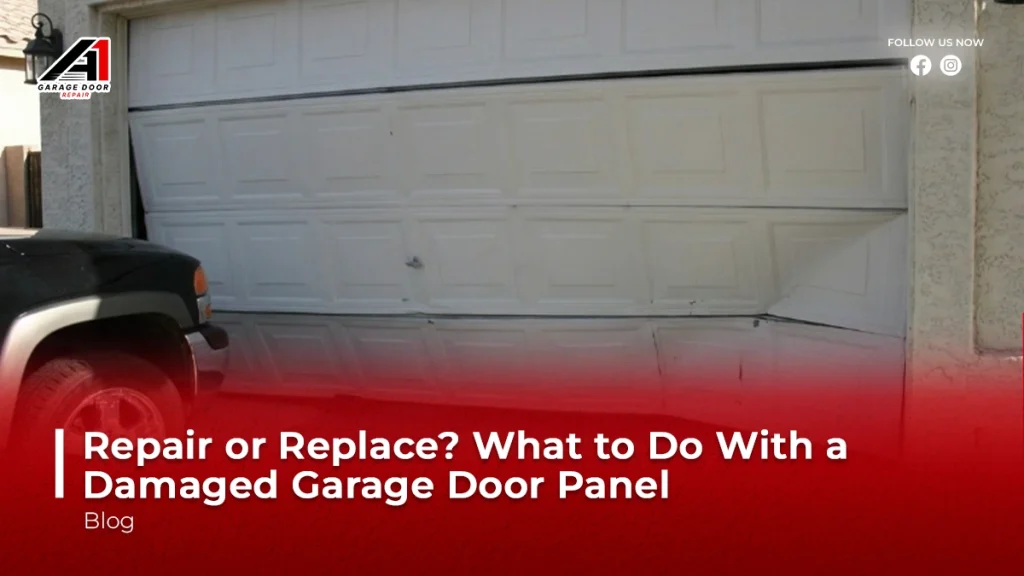
A dented garage door panel is often treated as a cosmetic problem. In some cases, that is all it is. However, damage that changes the shape, alignment, or movement of the door can affect much more than curb appeal.
A panel may be damaged by a vehicle, severe weather, falling equipment, or repeated contact with objects stored too close to the door. Rust and age can also weaken a section gradually. The door may continue operating afterward, but each cycle can place additional stress on the hinges, rollers, tracks, and opener.
The right solution depends on where the damage occurred, how deeply the panel was affected, and whether the rest of the door remains stable. A1 Garage Door Repair can inspect the complete system and help determine whether the panel can be repaired, replaced individually, or should be addressed as part of a full door replacement.
When Damaged Garage Door Panel is More Than Cosmetic
A shallow dent that does not interfere with movement may have little effect on the door’s operation. Damage becomes more concerning when the panel bends at a hinge point, rubs against the frame, or causes the door to move unevenly.
Garage door panels are connected rather than operating as separate pieces. As the door travels through the curved section of the tracks, each panel must move correctly with the sections above and below it. A bent section can change that movement and place pressure on nearby hardware.
Watch the door from a safe distance while it opens and closes. Shaking, scraping, hesitation, or a visible change in alignment may indicate that the damage has spread beyond the outer surface.
Common Types of Garage Door Panel Damage
- Shallow dents that do not interfere with normal movement
- Deep creases that change the shape of the section
- Cracks or splits around hinges and mounting points
- Rust that has weakened the lower part of the door
- Warping that prevents the sections from sitting evenly
- Impact damage from a vehicle, storm debris, or stored equipment
- Separation between the outer surface and internal insulation.
After a strong impact, the visible dent may not be the only issue. The tracks, rollers, cables, and opener should also be checked for movement or misalignment.
How Chicago Weather Can Worsen the Damage
Moisture can enter chipped paint, cracked seams, and exposed metal. Salt and slush carried into the garage can speed up corrosion around the lower panel, while temperature changes may make a bent section or damaged seal more noticeable.
Cleaning the door and touching up small finish damage can slow deterioration, but spreading rust and structural bends need a closer look. Homeowners preparing for severe weather can also review A1’s garage door storm preparation guide for related maintenance checks.
Can a Dented Panel Be Repaired?
Minor dents may sometimes be improved when the metal is not split and the door still moves smoothly. Results depend on the panel material, finish, and insulation. Cosmetic work may reduce the dent without making an older section look factory-new.
Deep folds are harder to correct because reshaping stretched metal can weaken it or leave a visible line. Before choosing a cosmetic repair, compare the cost with replacing the affected section and have the door checked for hidden alignment problems.
When One-Panel Replacement is Practical
Individual panel replacement can be a practical option when the remaining sections are in good condition. It allows the damaged portion to be removed without replacing the complete garage door.
The new section must be compatible with the existing door. Its size, design, construction, hinge placement, and connection points need to match. Color can be another concern. Even when the same factory finish is available, an older door may have faded enough for the new panel to look noticeably different.
Replacement becomes more complicated when the original model is discontinued or the manufacturer no longer produces matching sections. In those cases, adapting an unrelated panel may create alignment and appearance problems.
Availability and appearance can be limiting factors. Older models may be discontinued, and a new factory finish can look different beside panels that have faded. A1 can check compatibility as part of its garage door repair and installation services.
When Full Replacement May Offer Better Value
A complete replacement may be more practical when several sections are damaged, rust is widespread, the door sags, or matching parts are unavailable. It may also make sense when the door already needs frequent repairs or no longer provides the insulation and appearance the homeowner wants.
The decision should be based on the condition of the entire system, not only the largest dent. A reliable technician should explain the repair and replacement options without assuming the most expensive choice is automatically best.
What to Avoid After a Panel Is Damaged
Automatic residential garage door operators are subject to federal safety requirements. The U.S. Consumer Product Safety Commission explains the applicable safety standard for these systems. If panel damage interferes with closing or reversal, stop using the door until it has been inspected.
Here’s a quick overview of what not to do with a damaged panel.
- Do not keep running a door that scrapes, shakes, or hangs unevenly.
- Do not push a deeply bent section back into place while the door is moving.
- Do not loosen hinges, spring hardware, cables, or bottom brackets.
- Do not force the opener to move a crooked or jammed door.
- Do not stand beneath a damaged or partially open door.
- Do not assume vehicle-impact damage is only cosmetic.
- Do not bypass safety sensors to make the door close.
What to Expect During a Panel Inspection
A proper inspection includes more than looking at the dent. The technician should watch the door complete a full cycle and check the hinges, rollers, tracks, cables, springs, balance, opener, and safety response.
That broader check helps reveal whether the damaged panel caused another problem or whether an existing alignment issue contributed to the damage.
Takeaway
Not every dent requires a new garage door. A small cosmetic mark may be repairable, while a cracked, warped, or deeply creased section may need replacement. The door’s age, panel availability, surrounding hardware, and movement should all be considered before deciding.
Schedule an inspection when the door starts moving differently, no longer seals evenly, or has been struck hard enough to change its shape. Early attention can prevent a damaged section from adding stress to the opener and other moving parts.
Why Choose A1 Garage Door Repair?
A1 Garage Door Repair serves Chicago, Des Plaines, and surrounding Illinois communities. Its team handles damaged doors, installation, opener problems, springs, cables, tracks, and other issues that can affect the complete garage door system.
A1 can examine the damaged section and the hardware around it, then explain whether a focused repair or a larger replacement is the more practical solution. To arrange an inspection, contact A1 Garage Door Repair before the damage begins interfering with normal operation.