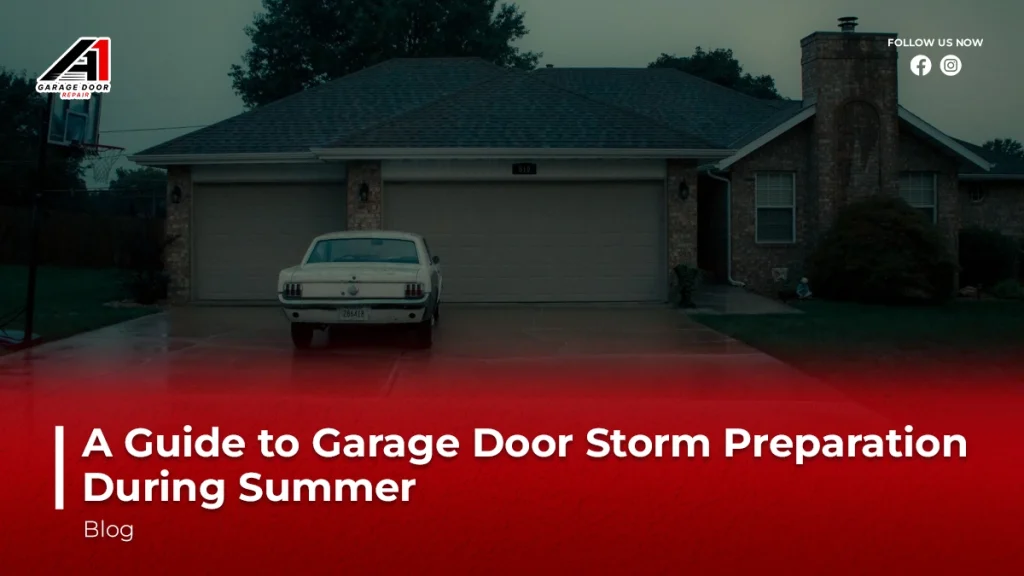
A Guide to Garage Door Storm Preparation During Summer
Why summer storms are hard on garage doors
During a Chicago summer storm, the door may face wind pressure, rainwater along the bottom edge, sudden humidity changes, flying branches, hail, and power interruptions. These conditions do not always create a new problem by themselves. More often, they expose problems that were already developing.This is the reason why garage door storm preparation is crucial.
Here’s a comprehensive guide that will walk you through the process.
Why Garage Door Storm Preparation is Crucial During Summer?
Summer storms in Chicago can arrive quickly. One day may feel hot and humid, and the next storm system may bring heavy rain, strong wind, hail, lightning, and power outages. For many homes, the garage door is one of the largest openings on the property, so it should be part of the seasonal garage door storm preparation checklist.
This is especially important for Chicago homes with detached garages, alley-facing doors, older hardware, uneven concrete, or weather seals that have already started to crack. A garage door that seems only slightly noisy, loose, or uneven on a normal day may become a bigger problem when wind, water, and debris are involved.
Getting ahead of those issues can help reduce the chance of water getting into the garage, the opener failing when the power returns, or the door getting stuck at the worst time.
Start with the bottom weather seal
The bottom weather seal is one of the simplest parts of the garage door, but it does a lot of work during storm season. It helps close the gap between the bottom of the door and the garage floor. When that seal is worn out, water, leaves, dirt, insects, and humid air can get inside more easily.
A good seal should make steady contact with the floor when the door is closed. If you can see daylight under the door, or if rainwater gets inside after a storm, the seal may be cracked, flattened, loose, or no longer shaped correctly for the floor.
Chicago garages often have older concrete slabs or uneven surfaces near the entrance. Replacing the seal may help, but the door alignment and floor condition should also be checked. A seal cannot do its job well if the door does not sit evenly when it closes.
Watch for water around the garage entrance
Heavy summer rain can make drainage problems obvious. If water pools near the garage door, it can push against the bottom seal and seep into the garage. Over time, that moisture can lead to rust on hardware, damaged stored items, musty odors, and a garage that feels damp long after the storm has passed.
After a storm, look at the inside edge of the garage floor. Water stains, damp cardboard, rust near the bottom brackets, or debris pushed under the door can all point to a sealing or drainage issue. The garage door may not be the only cause of water intrusion, but it is one of the first places to inspect.
If the door does not fully close, if the bottom seal is torn, or if the door is crooked when it reaches the floor, schedule garage door maintenance before the next storm makes the problem worse.
Check panels before wind and debris make damage worse
Garage door panels protect the garage opening from wind, rain, and impact. A dented or cracked panel may still allow the door to open and close, but it can weaken the door section and affect how the door moves. If a panel is already bent, storm pressure may make the damage worse.
Look for cracks, rust along the lower sections, gaps between panels, loose fasteners, and sections that flex more than they should. On wide garage doors, even small panel issues can affect the way the door travels along the tracks.
Panel damage should not be ignored just because the opener still works. The opener may be forcing the system to move even though the door is no longer moving evenly. That can create additional wear on the opener, rollers, hinges, and tracks.
Make sure the door moves smoothly before the next storm
A door that shakes, squeaks, drags, or jerks while moving is already giving a warning sign. Summer storms can add moisture and debris to the tracks, and repeated use during busy summer months can make worn parts more noticeable.
The door should open and close in a controlled way without heavy vibration or grinding sounds. If it looks uneven, stops halfway, rubs against the track, or feels unusually heavy when operated manually, the issue may involve the rollers, track alignment, springs, cables, or door balance.
Do not force a stuck garage door with the opener. If the door is jammed or crooked, forcing it can damage the opener and may make the door unsafe. A trained technician should inspect the full system before it is used again.
Do not overlook springs and cables
The springs and cables help carry the weight of the garage door. When they are working properly, the opener does not have to lift the full weight of the door by itself. When they are worn, loose, frayed, or out of balance, the opener may sound strained and the door may become unreliable.
Storm season is a bad time to discover that the door is too heavy to lift manually. If the power goes out and the opener cannot be used, the door should still be safe to operate by hand after it is disconnected from the opener. If it is too heavy, drops quickly, or will not stay partly open, the door needs service.
Homeowners should not adjust garage door springs or cables on their own. These parts are under high tension and can be dangerous without the right tools and training.
Prepare the opener for storm-related power problems
Power outages and surges can affect garage door openers. Before severe weather is in the forecast, make sure you know how the emergency release works. The release cord should be accessible, and everyone in the household who may need to use the garage should understand the basics of manual operation.
It is also a good time to check the wall button, remotes, keypad, opener light, and backup battery if the opener has one. Weak remote batteries or an unreliable keypad may seem minor now, but they become more frustrating when the weather is bad or the power has just come back on.
If the opener hums, flashes, reverses unexpectedly, or stops before the door finishes moving, the problem may be with the opener, the sensors, the travel limits, or the door system itself. Opener issues should be inspected together with the rest of the garage door, not treated as a separate problem every time.
Safety sensors can cause storm-day headaches
Garage door safety sensors sit near the bottom of the door opening. They help prevent the door from closing when something is in the way. During the summer, sensors can be affected by dirt, moisture, sunlight, loose brackets, or objects stored near the door.
If the door starts to close and then reverses, or if the opener light flashes, the sensors may be blocked or misaligned. Wiping the sensor lenses and clearing the area around the door may help, but repeated sensor problems may require repair or adjustment.
Do not bypass garage door safety sensors just to get the door closed before a storm. If the sensors are not working correctly, the door may not be operating safely.
Detached and alley-facing garages need extra attention
Many Chicago homes have detached garages behind the house or garage doors that face an alley. These doors can be more exposed to wind, debris, rain runoff, and daily wear from frequent vehicle access. Alley dust, leaves, trash, and small stones can also collect near the threshold and interfere with the bottom seal.
Before storm season gets active, clear the area around the garage door. Move garbage bins, branches, tools, outdoor furniture, bikes, and storage items that could blow into the door or block the sensors. A clean garage entrance helps the door close properly and reduces the chance of impact damage during windy weather.
For detached garages, it is also smart to check whether the door locks properly and whether the opener release is secure. Storm preparation is not only about weather. It is also about making sure the garage stays closed, protected, and usable after the storm passes.
What homeowners can check before a summer storm
A quick visual check before severe weather can help you catch obvious issues before the garage door becomes harder to use. You do not need to take the system apart. The goal is simply to notice signs that the door may not be sealing, moving, or responding the way it should.
Before a storm arrives, check for:
- Gaps under the garage door when it is fully closed
- Cracked, loose, or flattened weatherstripping
- Water stains or damp areas near the garage entrance
- Dented, cracked, or loose garage door panels
- Rust near the bottom brackets, hinges, or lower sections
- Tracks that look bent, dirty, or blocked by debris
- Sensor lights that are off, flickering, or not aligned
- A door that shakes, drags, or sounds louder than usual
- An opener that reverses, flashes, hums, or stops early
- Branches, bins, tools, bikes, or outdoor items near the door
If the garage door closes unevenly, leaves a gap at the floor, reverses without a clear reason, or looks unstable while moving, it should be inspected before the next storm. Small issues can become more serious when heavy rain, wind, debris, or power problems are involved.
Chicago storm safety reminders
Garage door storm preparation should be part of a broader storm-readiness plan. Ready.gov recommends paying attention to local alerts and warnings, preparing for power outages, and avoiding plugged-in electrical equipment during thunderstorms. You can review its homeowner guidance here: Thunderstorms & Lightning from Ready.gov.
For the garage specifically, that means thinking ahead. Know how to open the door manually if the power goes out. Keep the garage entrance clear. Do not stand near a damaged or unstable door during high wind. If water is entering the garage, wait until conditions are safe before inspecting the area.
When to schedule garage door service before storm season
A garage door storm preparation service visit may include checking the weather seal, tracks, rollers, hinges, springs, cables, opener, sensors, travel limits, door balance, and mounting hardware. The goal is not only to fix one obvious issue. The goal is to make sure the full system is ready to operate safely and reliably through summer weather.
Preventive garage door maintenance can also help homeowners avoid emergency calls after a storm. If a technician finds a worn roller, loose bracket, poor seal, or opener strain early, it may be easier and less costly to address before severe weather causes a larger problem.
Final takeaway
Chicago summer storms can put extra stress on a garage door system. Heavy rain can expose weak seals. Wind can make loose hardware more noticeable. Power outages can reveal opener and manual-release problems. Moisture can make worn parts louder, rougher, or less reliable. Effective garage door storm preparation can help you deal with these issues effectively.
A summer garage door inspection can help protect the garage, reduce opener strain, and keep the door working when you need it most. For help with garage door repair in Chicago, garage door maintenance, opener troubleshooting, sensor repair, weather seal replacement, or storm-related garage door problems, contact A1 Garage Door Repair.