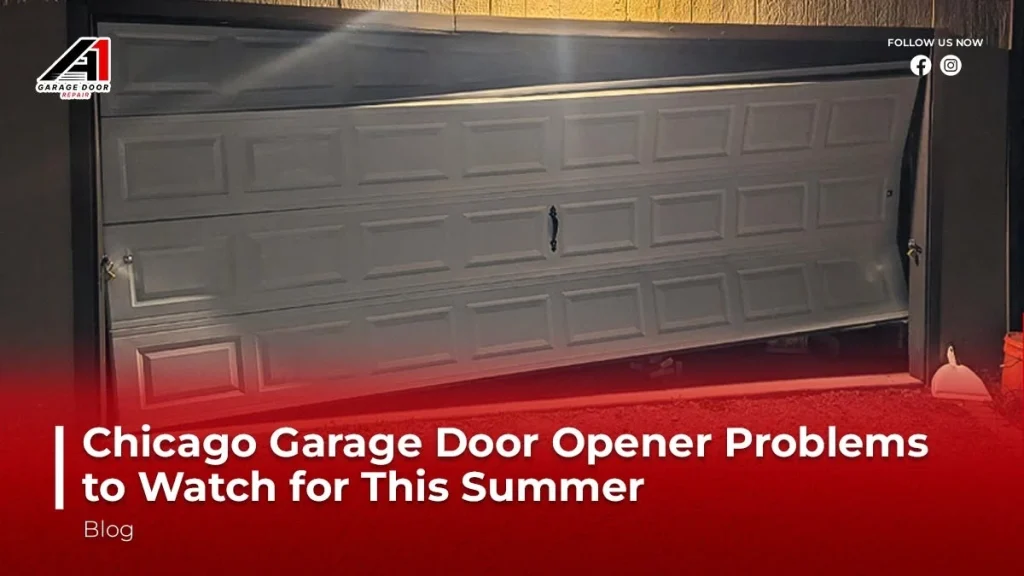
Chicago Garage Door Opener Problems to Watch for This Summer
Should Chicago Homeowners Service Their Garage Door Opener Before It Fails?
Summer is a busy season for many Chicago households. Between home projects, kids going in and out, bikes, lawn equipment, weekend plans, and vacation schedules, the garage door opener often gets used more than usual.
That extra use can expose problems that were easy to miss earlier in the year. A garage door opener that once seemed fine may start sounding louder, moving slower, reversing unexpectedly, or failing to respond consistently.
If your opener is acting differently, it is worth paying attention before the door gets stuck open, stuck closed, or becomes unsafe to operate.
Why garage door opener issues should not be ignored
A garage door opener does not actually lift the full weight of the door by itself. The springs, cables, rollers, tracks, and door balance all work together to make the door move safely. The opener guides that movement.
When the opener starts straining, it may be a sign that the opener is wearing out. It may also mean the door itself is out of balance, dragging, or creating too much resistance.
That is why garage door opener repair should include more than just checking the motor. A proper inspection should look at the opener, safety sensors, remote controls, wall button, travel limits, force settings, chain or belt, door balance, rollers, tracks, and hardware.
Common signs your garage door opener needs service
Most opener problems give warning signs before the system completely fails:
- The opener is louder than usual.
Grinding, humming, rattling, or clicking can point to opener strain, loose hardware, worn rollers, or a chain or belt issue. - The door moves slowly.
A slow-moving door may be caused by opener wear, poor lubrication, track resistance, or a balance problem. - The opener runs but the door does not move.
This may happen if the opener is disconnected from the door, the trolley is damaged, the gear assembly has failed, or the door is too heavy for the opener to move safely. - The door starts closing, then reverses.
This often points to sensor alignment, sensor obstruction, force setting issues, or resistance in the door system. - The remote works only sometimes.
Intermittent remote problems may be caused by weak batteries, signal interference, receiver issues, or opener logic board problems. - The wall button works but the remote does not.
This can help narrow the issue to the remote, keypad, receiver, programming, or battery. - The opener light flashes.
Many openers use flashing lights to signal sensors or travel-limit problems. The exact meaning depends on the opener model. - The door closes too hard or does not close all the way.
This may indicate incorrect travel limits, opener force issues, track resistance, or a door that is not moving evenly.
Do not blame the opener too quickly
Many homeowners assume the opener is the problem any time the door stops working. Sometimes that is true. Other times, the opener is only reacting to another problem.
For example, if the garage door is heavy, crooked, dragging, or out of balance, the opener may struggle because the door system is not moving correctly. Replacing the opener without fixing the door can lead to the same problem again.
Before deciding that the opener needs replacement, check for these signs:
- The door looks uneven when closed.
- The door shakes while moving.
- The opener sounds strained.
- The door feels unusually heavy when lifted manually.
- The door will not stay halfway open when disconnected from the opener.
- A cable looks loose, frayed, or out of place.
- A roller has slipped out of the track.
If any of these signs are present, schedule garage door maintenance in Chicago before continuing to use the opener.
Safety sensors are a major part of opener performance
Modern garage door openers rely on safety sensors near the bottom of the door opening. These sensors help prevent the door from closing when something is in the path.
If the sensors are dirty, blocked, loose, misaligned, or damaged, the door may refuse to close or may reverse unexpectedly.
The U.S. Consumer Product Safety Commission explains that residential garage door openers manufactured after January 1, 1993 must meet entrapment protection requirements. You can read more from the CPSC here: Safety Commission Publishes Final Rules for Automatic Garage Door Openers.
UL Standards & Engagement also explains the role of automatic garage door safety standards, including entrapment protection features, here: Automatic Garage Door Standards.
Chain-drive, belt-drive, and screw-drive opener issues
Different opener types can develop different symptoms.
Chain-drive openers
Chain-drive openers are common and durable, but they can become noisy when the chain is loose, dry, or worn. If the opener rattles or jerks during movement, the chain and sprocket may need inspection.
Belt-drive openers
Belt-drive openers are usually quieter than chain-drive models. If a belt-drive opener becomes noisy, slow, or uneven, the belt, motor, rail, or door balance should be checked.
Screw-drive openers
Screw-drive openers depend on smooth movement along the rail. If the opener becomes loud, jerky, or inconsistent, the drive mechanism may need cleaning, lubrication, or repair.
No matter what type of opener you have, the opener should not have to force the door open or closed. If it sounds like it is struggling, there may be a larger system issue.
What homeowners should not try to fix alone
Garage door openers are connected to a heavy moving door system. Some repairs should be handled by a professional.
Do not adjust springs or cables. Do not force a stuck door open with the opener. Do not bypass safety sensors. Do not keep running the opener if the door is crooked, jammed, or unusually heavy. Do not attempt internal opener repairs unless you are trained to do so.
The International Door Association recommends regular inspection and maintenance of garage door systems, including balance and reversing mechanism checks. You can review its homeowner guidance here: Garage Door Care & Maintenance.
Is it better to repair or replace a garage door opener?
The right answer depends on what is actually causing the problem. In many cases, a garage door opener can be repaired without replacing the whole unit. Simple issues such as misaligned sensors, weak remote batteries, incorrect travel limits, loose hardware, or worn gears may only need adjustment or part replacement.
Repair is often the better option when the opener is generally reliable, the motor still runs well, and the issue can be traced to one specific component.
Replacement becomes the better choice when the opener keeps having problems even after service. An older opener with a failing motor, limited replacement parts, or outdated safety features may not be worth repeated repairs. The same is true if the opener is too weak for the size or weight of the garage door.
Homeowners may also choose replacement for convenience upgrades. A newer opener can offer quieter operation, keypad access, smart controls, battery backup, and improved safety features.
The best next step is to have the opener and the full garage door system inspected together. That way, a technician can tell whether the issue is truly with the opener or whether the door itself is creating extra strain.
Why schedule an opener tune-up during summer?
Summer is a good time to service a garage door opener because the system often gets used more throughout the day. With people coming and going more often, small opener problems can become harder to ignore.
A tune-up gives a technician a chance to check how the opener is performing before it becomes unreliable. If the motor is straining, the sensors are slightly misaligned, or the door is creating too much resistance, those issues can usually be caught early.
During an opener-focused tune-up, the technician may inspect the remote controls, keypad, wall button, safety sensors, chain or belt, gears, sprockets, travel limits, and opener force settings. They may also check the door balance, rollers, tracks, hinges, and mounting hardware because these parts can affect how hard the opener has to work.
The main goal is not simply to get the opener running. It is to make sure the opener and the garage door are working together smoothly, safely, and reliably.
Final takeaway
If your garage door opener is louder, slower, less responsive, or reversing for no clear reason, do not ignore it. The problem may be with the opener, the sensors, the remote system, or the door itself.
For Chicago homeowners, a summer garage door tune-up is a smart way to catch opener issues before they turn into a stuck door or an emergency service call.
For help with garage door opener repair in Chicago, garage door sensor repair, opener troubleshooting, or full garage door maintenance, contact A1 Garage Door Repair and have the system inspected by a trained technician.
Check out our Quora.